
A note on loudness, listening, and why we started Trust Your Ears
Over the last few decades, music has quietly changed.
Not the songs themselves, but the way they are mastered. Many records have been made louder and louder so they stand out on radio, playlists, and early digital platforms. The intention was good. The results were mixed.
This period became known as the loudness wars.
If you watch the short documentary by Waves Audio, it explains how this happened far better than we ever could. It features some of the producers and engineers who were actually there, talking honestly about the pressures of the time and the unintended consequences.
It is well worth 12 minutes of your time:
One of the easiest ways to understand the issue is visually. In the clip below, you can see how waveforms change as loudness is pushed further and further. Early on, music has shape and space. As compression increases, that shape slowly disappears.

What you are seeing is not just a technical change. It is the removal of contrast. Quiet moments get pulled up. Loud moments get pushed down. Everything sits at the same intensity.
This is why some music feels exciting at first but tiring over time. Your ears and your brain are never given a moment to rest.
Why slowing down helps
There is good evidence that focused listening has real benefits. When you sit with music intentionally, even for a short time, stress levels drop and concentration improves. It is one of the few everyday activities that encourages your nervous system to slow down.
Thirty minutes is enough.
Long enough to settle. Long enough to hear how a record unfolds. Long enough for dynamics to matter again.
This is not about listening loudly or analysing recordings. It is simply about giving music your attention.
On more revealing systems, the difference becomes very clear. Music with space and dynamics feels natural and engaging. Over-compressed music tends to feel flat and restless. You do not need to measure it. You can feel it.
Trust Your Ears
This is where the Listening Circle begins.
Once a day, try setting aside thirty minutes. No phone. No scrolling. No skipping tracks. Just one album, played as it was intended.
To support this, we have built a small web app called Trust Your Ears.
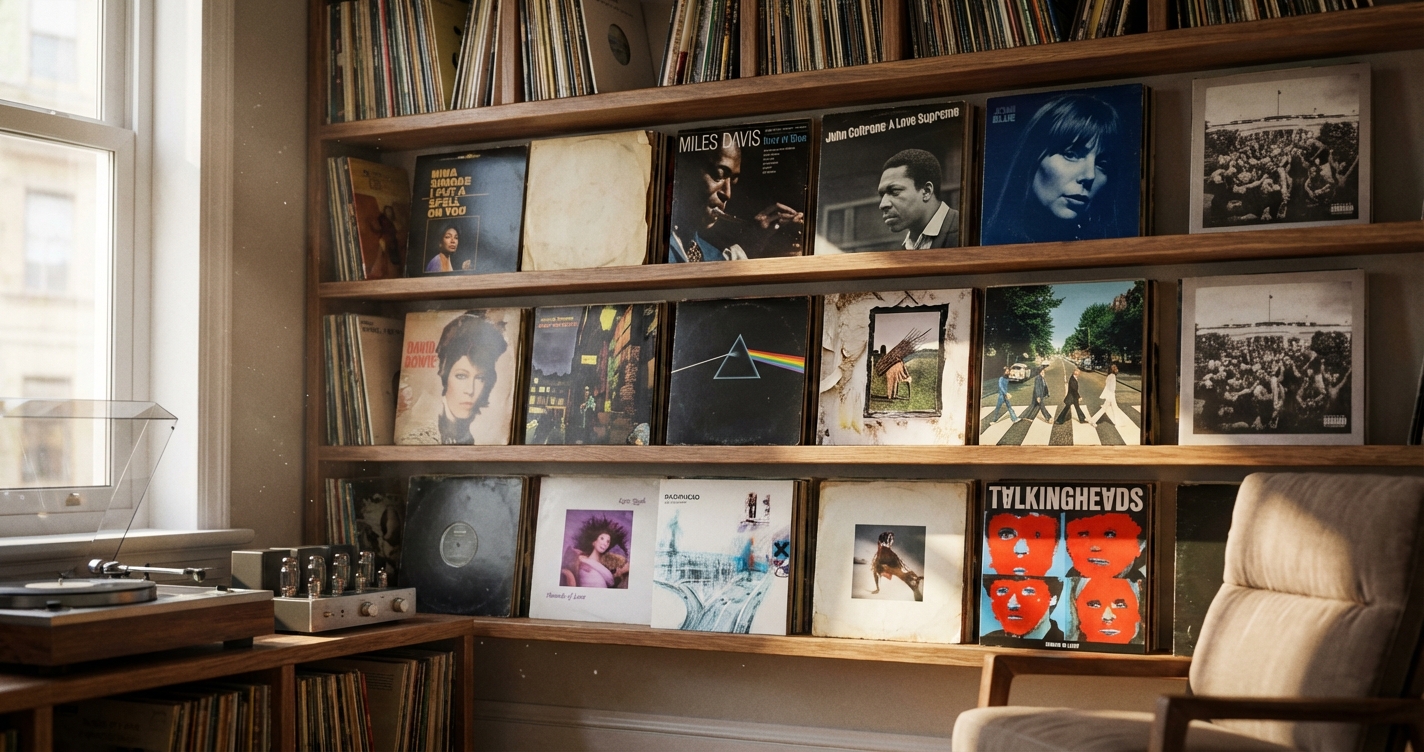
It is a shared place to add albums that reward proper listening and to see what others are spending time with.
There are no ratings and no charts. The point is conversation.
Why an album works.
Why a certain pressing feels different.
Why something grows on you after ten minutes rather than impressing instantly.
If you have a record that sounds better the longer you sit with it, add it. If you disagree with someone else’s choice, even better. Say why.
Over time, this becomes a living listening list shaped by people rather than algorithms.
Put the kettle on. Sit down. Let the music take up some space.
Trust your ears.
Any questions or comments on how we can make anything we do better please contact us. We’re an old but small company of humans building things we love: [email protected]
Image of the Week
